What Developers Should Include in a Ground-Up Construction Package
Learn how plans, budgets, permits, experience, liquidity, and project timelines can affect the review of a ground-up construction opportunity.
Jules Capital Partners 9 min read
Construction Financing Requires a Complete Package
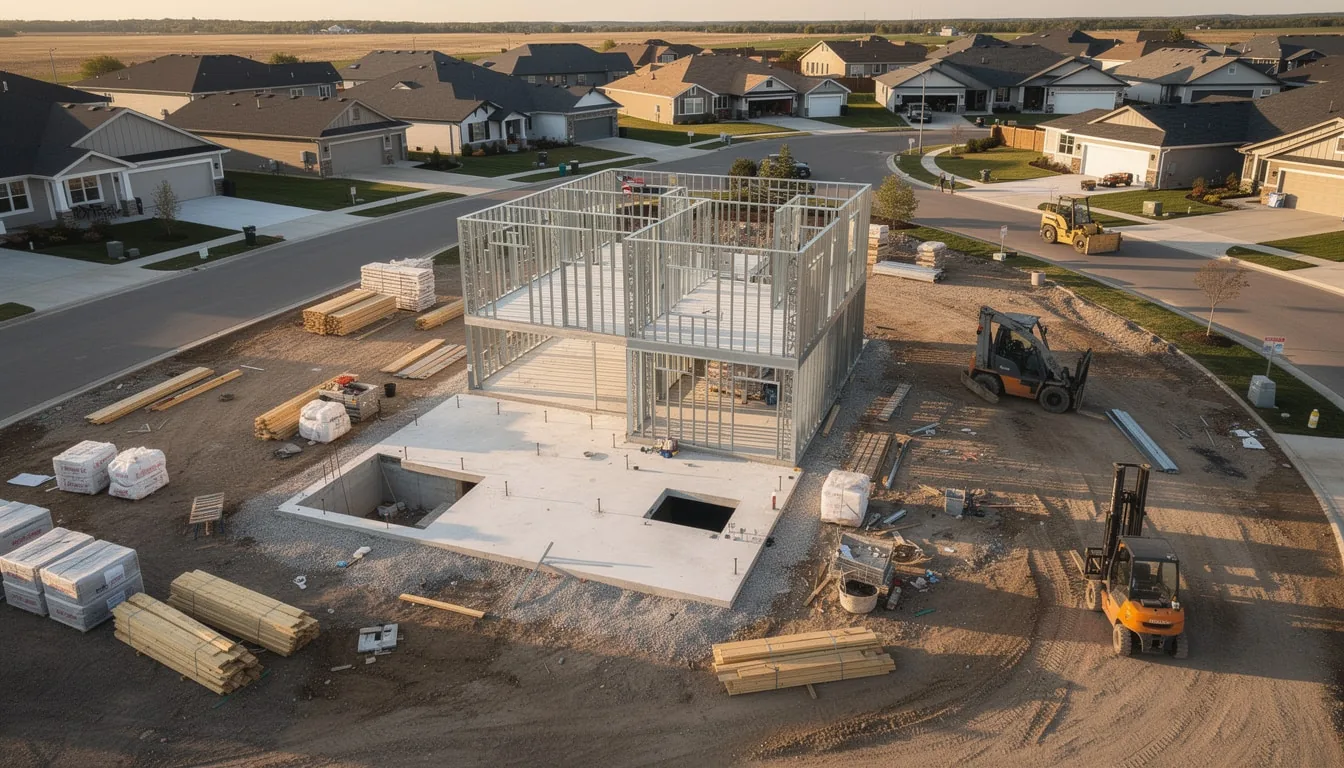
Ground-up construction financing is among the most complex areas of private lending. Unlike a straightforward acquisition or refinance, construction deals require capital sources to underwrite not just the property and borrower — but the entire development plan, budget, timeline, and execution capability.
A comprehensive construction package demonstrates that you've thought through every aspect of the project and gives capital sources the confidence to commit significant resources to your build.
Architectural Plans and Engineering
Every construction financing package should include:
• Stamped Architectural Plans — Complete construction drawings approved by a licensed architect, including floor plans, elevations, sections, and details.
• Engineering Reports — Structural, civil, and MEP (mechanical, electrical, plumbing) engineering as required by the jurisdiction.
• Site Plan — Showing the building footprint, setbacks, parking, utilities, drainage, and landscaping.
• Survey — A current ALTA/NSPS survey showing boundaries, easements, encroachments, and topography.
The Construction Budget
The construction budget is often the most scrutinized document in a construction financing package. Capital sources want to see:
• Line-Item Detail — Every major cost category broken out individually (site work, foundation, framing, roofing, HVAC, electrical, plumbing, finishes, landscaping, etc.).
• Contingency — A reasonable contingency allocation (typically 5–10% of hard costs) for unexpected conditions.
• Soft Costs — Architecture, engineering, permits, inspections, insurance, legal, and financing costs.
• Draw Schedule — A proposed timeline showing when funds will be needed at each construction phase.
Budgets that appear unrealistically low or lack sufficient detail are among the most common reasons construction financing requests are delayed or declined.
Permits and Entitlements
The status of your permits and entitlements significantly impacts how a capital source evaluates your project:
• Zoning Confirmation — Written confirmation that your intended use is permitted under current zoning.
• Building Permit Status — Whether permits have been applied for, are in review, or have been issued.
• Environmental Clearances — Phase I environmental site assessment, and Phase II if required.
• Impact Fees and Utility Availability — Confirmation of utility connections and any applicable impact or tap fees.
Projects with permits already issued are generally viewed more favorably than those still in the approval process.
Developer Experience and Team
Construction lending inherently involves execution risk. Capital sources want to understand who is building the project and whether they have the experience to deliver it successfully.
Be prepared to present:
• A development resume showing comparable completed projects
• General contractor qualifications, licensing, and insurance
• References from previous lenders, if available
• Your project management approach and reporting capabilities
• Key team members and their roles
Liquidity and Financial Capacity
Construction projects require significant financial commitment beyond the loan proceeds. Capital sources typically want to see:
• Equity Contribution — Your cash investment in the project, usually expressed as a percentage of total project cost.
• Post-Close Liquidity — Cash reserves remaining after closing, demonstrating your ability to handle cost overruns or delays.
• Personal Financial Statement — A current statement showing assets, liabilities, and net worth.
• Entity Documentation — Operating agreements, articles of organization, and authorization documents for the borrowing entity.
Exit Strategy and Market Analysis
Every construction financing package should include a clear explanation of what happens after the project is completed:
• For-Sale Projects — Comparable sales data, projected sale prices, absorption rate analysis, and any pre-sale activity.
• Rental Projects — Market rent analysis, projected stabilized NOI, lease-up timeline, and long-term financing plan.
• Mixed-Use Projects — A combination of retail/commercial lease projections and residential sale or rental analysis.
Jules Capital Partners reviews construction opportunities across multiple capital sources and can help developers identify which programs may align with their project's specific requirements.
Have a Financing Opportunity to Review?
Submit the property, requested loan structure, project details, and exit strategy to Jules Capital Partners for an initial opportunity review.
This material is provided for general informational purposes only and does not constitute a commitment to lend, legal advice, tax advice, investment advice, or a guarantee of financing. Programs, terms, leverage, pricing, and availability vary based on jurisdiction, capital source, property type, borrower qualifications, valuation, underwriting, and transaction structure.