Bridge Loans vs. DSCR Loans: Choosing the Right Structure
Understand how bridge and DSCR financing differ and which structure may align with an acquisition, renovation, stabilization, or long-term rental strategy.
Jules Capital Partners 7 min read
Two Tools for Different Stages
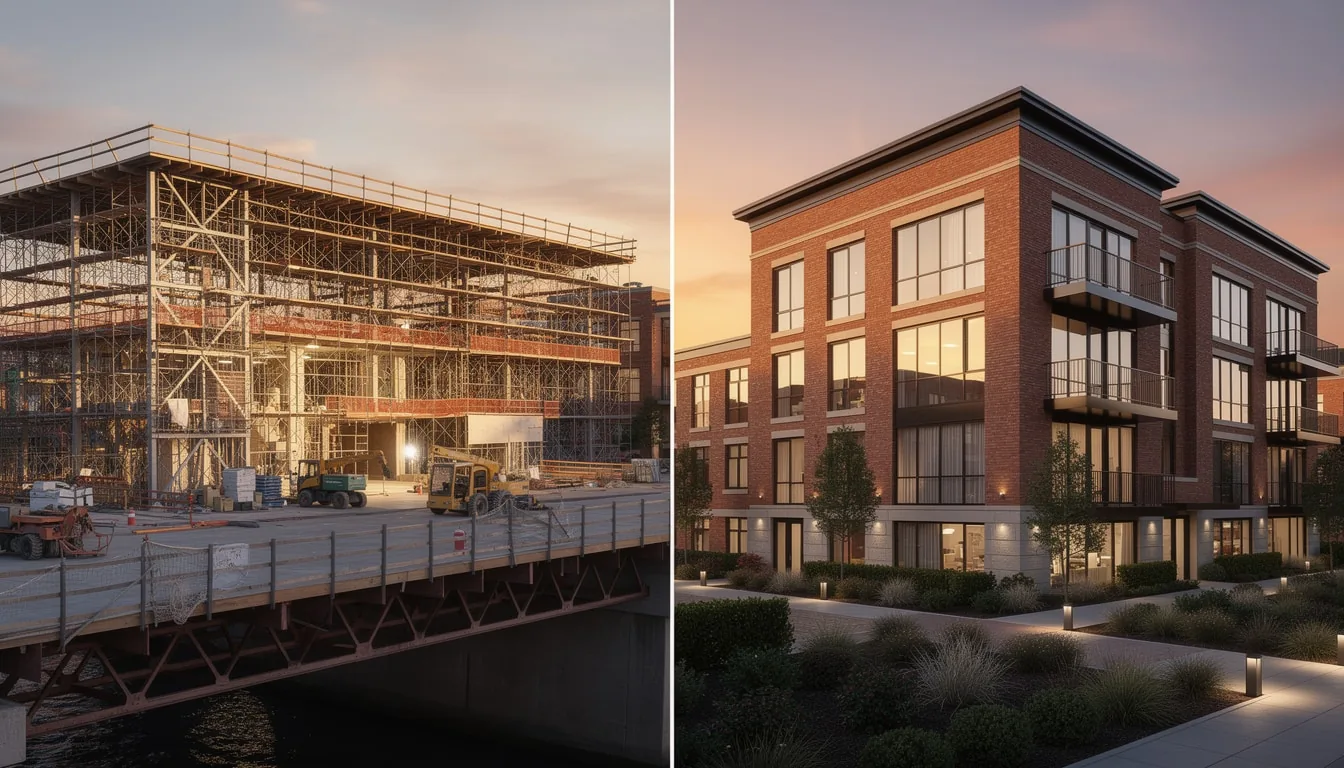
Bridge loans and DSCR loans serve fundamentally different purposes in a real estate investor's capital strategy. Understanding when to use each — and how they connect — is essential for structuring profitable transactions.
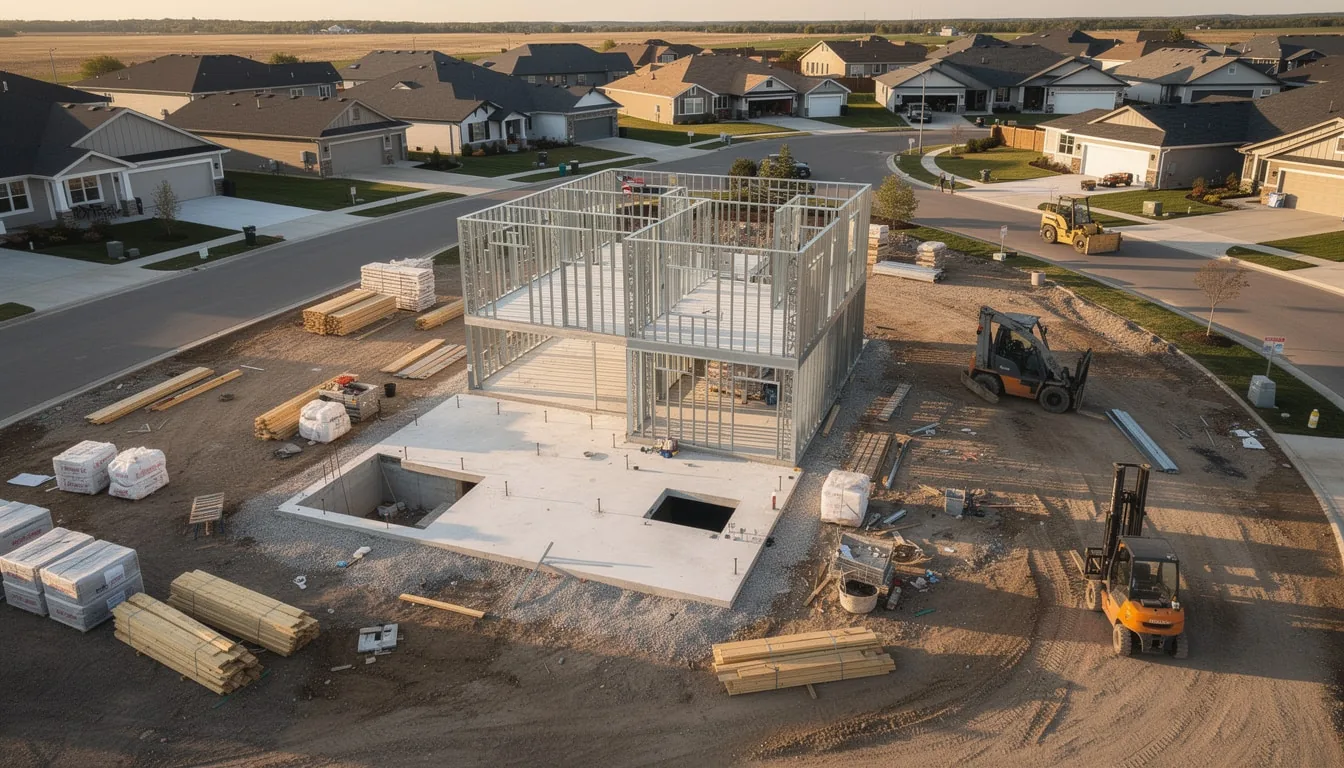
A bridge loan is short-term financing designed to "bridge" the gap between an acquisition and a longer-term outcome. A DSCR loan is a long-term financing product that qualifies based on the property's income rather than the borrower's personal income.
Many successful investment strategies use both — a bridge loan to acquire and stabilize, followed by a DSCR refinance to hold long-term.
When Bridge Financing Makes Sense
Bridge loans are typically used when:
• You have a time-sensitive acquisition, subject to lender availability, documentation, and underwriting
• The property requires renovation before it can qualify for permanent financing
• The property is vacant or under-performing and doesn't yet generate sufficient income
• You're executing a value-add strategy with a defined exit timeline
• Traditional lenders cannot move fast enough for the opportunity
Bridge loans generally carry higher interest rates than permanent financing — but they provide the speed and flexibility that time-sensitive transactions require.
When DSCR Financing Makes Sense
DSCR (Debt Service Coverage Ratio) loans are designed for income-producing rental properties. The primary qualification metric is the property's ability to generate enough rental income to cover the debt service — typically expressed as a ratio of 1.0x or higher.
DSCR loans work well when:
• The property is stabilized and generating consistent rental income
• You want long-term hold financing (typically 30-year terms)
• You prefer to qualify based on property cash flow rather than personal income
• You're building a rental portfolio and want scalable financing
• You're refinancing out of a bridge loan after completing renovations
Key Differences at a Glance
Term Length — Bridge: 12–24 months. DSCR: 5–30 years.
Qualification — Bridge: Property value, borrower experience, exit strategy. DSCR: Property rental income vs. debt service.
Interest Rates — Bridge: Higher (reflecting short-term risk). DSCR: Lower (reflecting stabilized income).
Use Case — Bridge: Acquisition, renovation, repositioning. DSCR: Long-term hold, cash flow, portfolio growth.
Speed — Bridge: Often 10–21 days. DSCR: Typically 21–45 days.
Prepayment — Bridge: Usually flexible. DSCR: May include prepayment penalties.
The Bridge-to-DSCR Strategy
One of the most effective capital strategies in real estate investing combines both products:
1. Acquire — Use a bridge loan to purchase a property quickly, often at a discount.
2. Renovate — Complete improvements using the bridge loan's rehab draw structure.
3. Stabilize — Place tenants and establish rental income history.
4. Refinance — Transition to a DSCR loan based on the property's new appraised value and rental income.
This strategy — sometimes called BRRRR (Buy, Rehab, Rent, Refinance, Repeat) — allows investors to recycle capital and scale their portfolios efficiently.
Choosing the Right Structure for Your Deal
The right financing structure depends on several factors unique to your transaction:
• What condition is the property in today?
• Is the property currently generating rental income?
• What is your intended hold period?
• How quickly do you need to close?
• What is your exit strategy?
Jules Capital Partners evaluates each opportunity individually and helps borrowers identify which financing structure — or combination of structures — may best align with their investment strategy.
Have a Financing Opportunity to Review?
Submit the property, requested loan structure, project details, and exit strategy to Jules Capital Partners for an initial opportunity review.
This material is provided for general informational purposes only and does not constitute a commitment to lend, legal advice, tax advice, investment advice, or a guarantee of financing. Programs, terms, leverage, pricing, and availability vary based on jurisdiction, capital source, property type, borrower qualifications, valuation, underwriting, and transaction structure.